Raising quail has become increasingly popular among homesteaders, bird enthusiasts, and hunting dog trainers alike. These small game birds are surprisingly easy to manage, require minimal space, and provide a reliable source of eggs, meat, or training birds for gun dogs. At HH Farm and Gun Dogs, we’ve seen firsthand how raising quail can complement both farm life and working dog training programs.
Why Raise Quail?
Quail offer several advantages compared to larger poultry.
1. Small Space Requirements
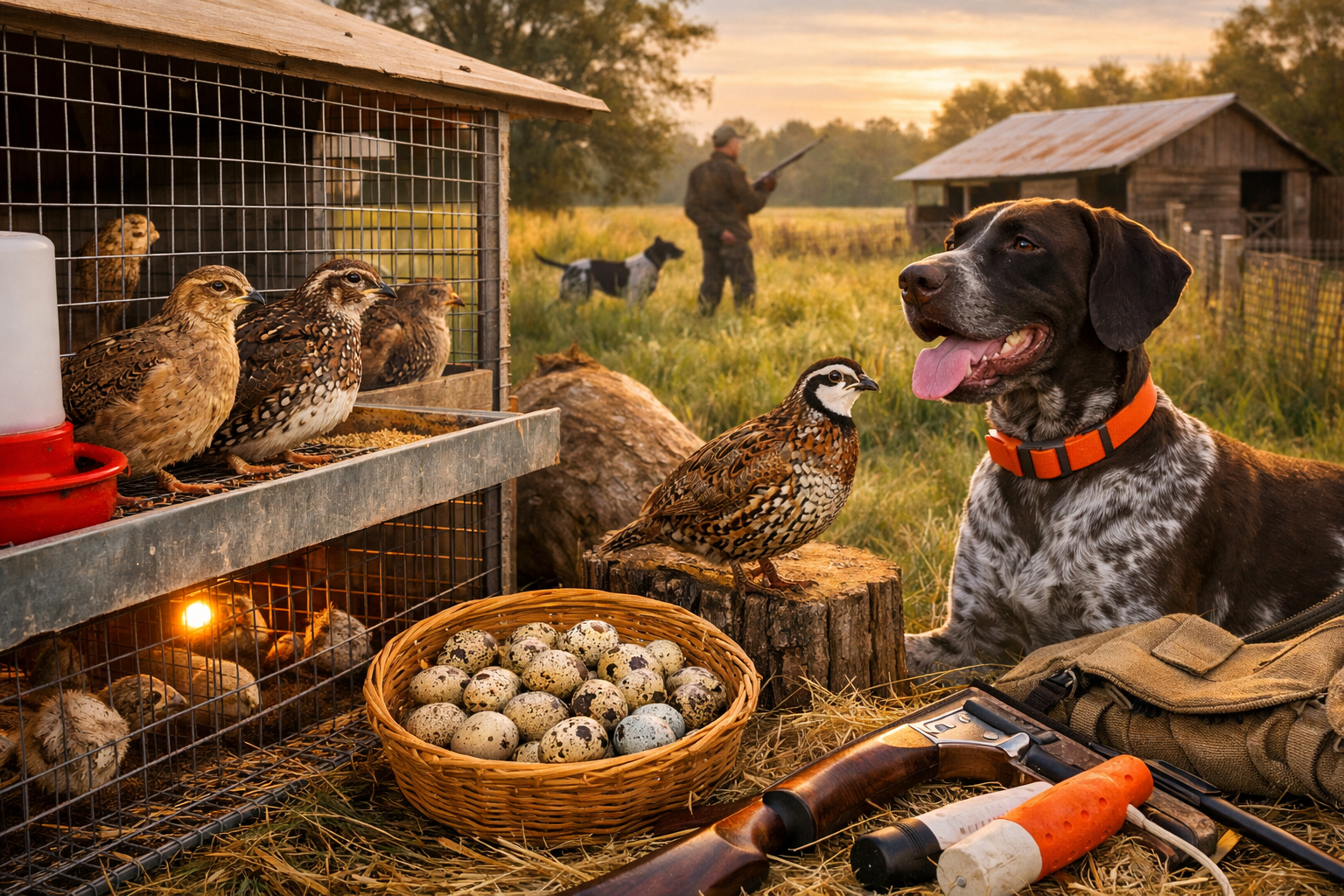
Quail thrive in compact environments. A well-designed cage or small aviary can house a productive covey in a fraction of the space required for chickens.
2. Fast Maturity
Quail grow quickly. Most varieties begin laying eggs at around six weeks of age, making them one of the fastest-return livestock options for small farms.
3. High Egg Production
A single hen can produce nearly 250–300 eggs per year. Though smaller than chicken eggs, quail eggs are rich, nutritious, and prized in many cuisines.
4. Ideal for Dog Training
For gun dog trainers, quail are excellent birds for developing pointing, flushing, and retrieving skills. Their size, flight behavior, and availability make them a reliable option for controlled training scenarios.
Choosing the Right Breed
While there are several species of quail, a few stand out for farm and training use.
Coturnix (Japanese Quail)
The most common breed for egg and meat production. They are hardy, easy to raise, and excellent layers.
Bobwhite Quail
Often preferred for hunting preserves and gun dog training due to their strong flight characteristics.
Each breed serves a slightly different purpose, so selecting the right one depends on your goals—production, training, or both.
Housing and Setup
Quail housing should prioritize safety, cleanliness, and airflow.
- Wire-bottom cages help keep birds clean by allowing waste to fall away.
- Solid roofing protects them from rain and predators.
- Proper ventilation prevents respiratory problems.
- Low ceilings (under 12 inches) reduce the chance of birds injuring themselves when startled.
Predator protection is essential. Even small predators such as rats, snakes, or raccoons can quickly devastate a covey if cages are not secure.
Feeding and Care
Quail require a high-protein diet, especially during growth and egg production. Most quail thrive on game bird feed containing 20–24% protein.
Fresh water must always be available. Nipple drinkers or small waterers help keep bedding dry and reduce contamination.
Basic care tasks include:
- Collecting eggs daily
- Refilling feed and water
- Cleaning cages regularly
- Monitoring birds for signs of illness or stress
With consistent care, quail are hardy birds that rarely require extensive intervention.
Breeding and Incubation
One of the most rewarding aspects of raising quail is how quickly you can grow your flock.
Typical incubation lasts 17–18 days for Coturnix quail. A small tabletop incubator can easily hatch dozens of chicks at once.
After hatching, chicks should be kept in a brooder with temperatures around 95°F, gradually lowering the temperature each week as feathers develop.
Within a few short weeks, those tiny chicks will already resemble adult birds.
Quail for Gun Dog Training
For trainers working with pointing breeds or flushing dogs, quail provide an excellent bird for controlled field work.
They allow trainers to:
- Introduce young dogs to bird scent
- Develop steady pointing behavior
- Practice retrieves in a safe, repeatable setting
Because quail can be raised on-site, trainers gain consistent access to birds without relying on seasonal availability.
Is Raising Quail Right for You?
Quail are a great addition to many farms and training programs. Their small size, fast growth, and versatility make them one of the most practical birds for small-scale livestock operations.
Whether your goal is fresh eggs, homegrown meat, or dependable birds for training gun dogs, raising quail offers a rewarding and manageable path.
At HH Farm and Gun Dogs, we believe in practical, sustainable approaches to both farming and dog training. Raising quail is one more way to build a self-sufficient system that supports both the land and the dogs that work it.
Interested in learning more about training gun dogs or farm-based training programs? Follow HH Farm and Gun Dogs for more tips, guides, and updates from the field.