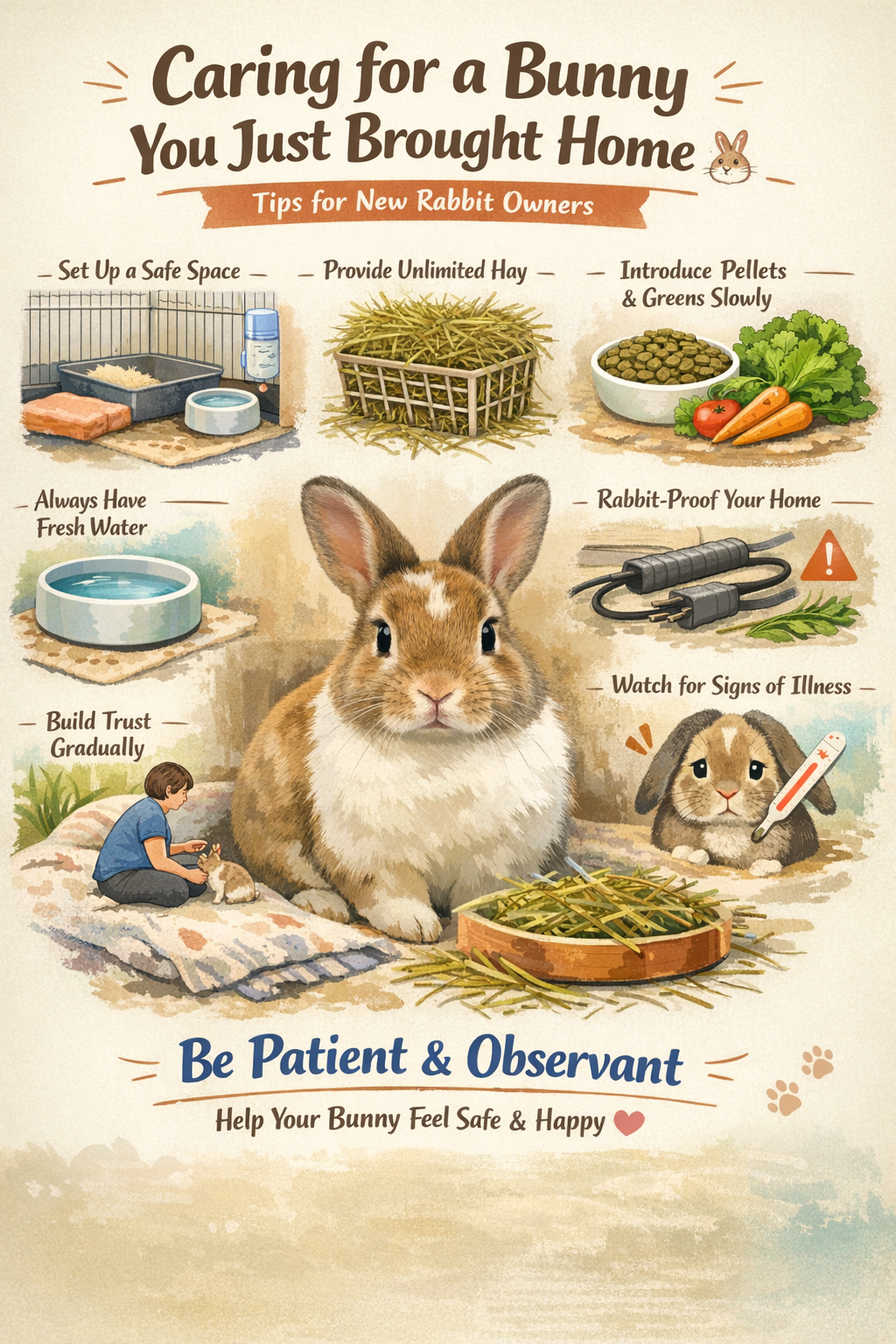
A Practical Guide for New Rabbit Owners
Bringing home a new bunny is exciting, but the first few days are critical for helping your rabbit adjust to its new environment. Rabbits are sensitive animals that thrive on calm surroundings, routine care, and proper nutrition. Understanding how to care for your bunny from the moment it arrives home will help ensure it stays healthy and comfortable.
Prepare a Quiet, Safe Space
When your bunny first arrives, place it in a quiet area of your home away from loud noises, other pets, and heavy foot traffic. Rabbits are prey animals, which means sudden movements and unfamiliar sounds can easily frighten them.
A simple starter setup should include:
- A secure enclosure or cage
- Soft bedding or a resting area
- A litter box
- Fresh hay
- Clean water in a bowl or bottle
Avoid constantly picking up or handling your bunny during the first day. Allow it to explore its new space and settle in naturally.
Provide Unlimited Hay
Hay is the most important part of a rabbit’s diet. It keeps their digestive system functioning properly and helps wear down their constantly growing teeth.
Good hay options include:
- Timothy hay (best for adult rabbits)
- Orchard grass hay
- Meadow hay
Young rabbits under six months old can also eat alfalfa hay, which contains more protein and calcium.
Your bunny should always have access to fresh, clean hay. It should make up about 80–90% of their diet.
Introduce Pellets and Greens Slowly
While hay is the foundation of a rabbit’s diet, pellets and fresh vegetables provide additional nutrients.
Start with a small amount of high-quality rabbit pellets each day. Overfeeding pellets can cause obesity and digestive problems.
Safe vegetables to introduce include:
- Romaine lettuce
- Cilantro
- Parsley
- Basil
- Dandelion greens
Introduce new greens gradually and watch for any digestive issues such as soft stool.
Make Sure Fresh Water Is Always Available
Rabbits need constant access to fresh water. Many rabbits prefer drinking from a heavy ceramic bowl rather than a hanging water bottle.
Clean and refill the water container daily to prevent bacteria buildup.
Rabbit-Proof Your Home
If you plan to allow your bunny time outside its enclosure, rabbit-proofing is essential. Rabbits love to chew, and they are especially attracted to electrical cords.
Protect your bunny by:
- Covering or hiding electrical wires
- Removing toxic plants
- Blocking access to small hiding spaces
- Providing chew toys to redirect chewing behavior
Wood blocks, cardboard tubes, and untreated wicker toys work well.
Watch for Signs of Stress or Illness
A new environment can be stressful for rabbits, so monitor your bunny closely during the first week.
Healthy rabbits should:
- Eat regularly
- Produce normal round droppings
- Be alert and curious
Warning signs include:
- Refusing food
- Very small or no droppings
- Lethargy
- Labored breathing
If these symptoms appear, contact a rabbit-experienced veterinarian as soon as possible.
Build Trust Slowly
Rabbits bond with their owners over time. The best way to build trust is by spending quiet time near your bunny each day.
Try sitting on the floor and letting the rabbit approach you rather than picking it up immediately. Offer small treats like a piece of carrot or leafy greens to create positive associations.
Within a few weeks, most rabbits become comfortable and may even follow you around the house.
Establish a Daily Routine
Rabbits thrive on consistency. Feeding, cleaning, and playtime should happen around the same times each day.
A simple daily routine includes:
Morning
Fresh hay, water, and a small portion of pellets.
Afternoon or evening
Fresh greens and supervised playtime outside the enclosure.
Night
Check water and hay levels before bedtime.
Final Thoughts
Bringing home a bunny is the start of a rewarding relationship. With proper housing, a hay-based diet, and gentle handling, rabbits can become affectionate and entertaining companions.
The first few days are all about patience and observation. Give your bunny time to adjust, keep its environment calm, and focus on consistent care. Before long, your new rabbit will feel safe, happy, and truly at home. 🐇